
IHHT and Longevity:
Can Oxygen Training Support Healthy Aging?
1. TL;DR: What Is the Connection Between IHHT and Longevity?
Aging is more than getting older. Over time, mitochondrial function, cellular energy production and metabolic regulation can change. These changes may affect how well we recover, move and maintain our health.
This is why scientists are increasingly interested in Intermittent Hypoxic-Hyperoxic Training (IHHT).
IHHT alternates between controlled low-oxygen and oxygen-enriched breathing phases. This changing oxygen environment creates a physiological stimulus that researchers are investigating for its potential effects on cellular adaptation and mitochondrial function.
At LONGFIAN, we see IHHT as an interesting development in oxygen-conditioning technology.
Here is what current research suggests:
Mitochondrial health: IHHT may influence mitochondrial function and quality-control processes.
Cellular adaptation: Oxygen fluctuations may activate adaptive stress-response pathways.
Physical performance: Some human studies have reported improvements in cardiorespiratory fitness.
Healthy aging: These effects may be relevant to maintaining physical function as people age.
Life expectancy: There is not yet sufficient clinical evidence that IHHT extends human lifespan.
The important distinction is that supporting healthy aging is not the same as reversing aging.
2. IHHT and Longevity: What Does the Research Say?
Several studies have explored the relationship between intermittent oxygen exposure and aging-related health indicators.
A 2022 systematic review published in Frontiers in Aging Neuroscience examined intermittent hypoxia training, IHHT and aging-related biomarkers. Researchers identified potential effects on physical function, cognitive performance, glucose metabolism, blood pressure and inflammatory markers.
Another 2022 systematic review in Sports Medicine – Open analyzed eight human studies involving intermittent hypoxia-hyperoxia exposure. Some reported improvements in exercise tolerance, peak oxygen uptake and cognitive performance.
These findings are encouraging, but the evidence remains limited. Study protocols and participant characteristics vary, and larger clinical trials are needed.
Key research areas:
| Research area | Potential relevance |
|---|---|
| Mitochondrial function | Cellular energy production |
| Oxygen-sensing pathways | Physiological adaptation |
| Oxidative stress | Cellular stress regulation |
| Cardiorespiratory fitness | Physical function |
| Metabolic regulation | Healthy aging |
3. How Might IHHT Support Healthy Aging? Five Steps
To understand why IHHT attracts attention in longevity research, let's look at five possible mechanisms.
Step 1: Activating Oxygen-Sensing Pathways
During the hypoxic phase, the body experiences reduced oxygen availability.
Cells respond through oxygen-sensing mechanisms involving proteins such as hypoxia-inducible factor 1-alpha (HIF-1α).
These pathways regulate genes associated with energy metabolism, oxygen utilization and physiological adaptation.
Step 2: Influencing Mitochondrial Function
Mitochondria produce ATP, the energy source that supports cellular activities.
Mitochondrial dysfunction is associated with several aspects of biological aging.
Researchers are investigating whether alternating hypoxic and hyperoxic exposure can influence mitochondrial adaptation and quality control, including mitophagy-the process through which cells remove damaged mitochondria.
This remains an active research area, not a guaranteed outcome of IHHT.
Step 3: Stimulating Cellular Adaptation
Controlled physiological stress can sometimes trigger beneficial adaptive responses. This concept is known as hormesis.
IHHT researchers are exploring whether oxygen fluctuations can influence antioxidant defenses, stress-response signaling and cellular resilience.
However, the dose matters. Excessive hypoxia or hyperoxia may cause harm rather than benefit.
Step 4: Supporting Cardiometabolic Function
Healthy aging depends on more than cellular mechanisms.
Cardiorespiratory fitness, blood pressure regulation and glucose metabolism also influence long-term health.
Some human studies have reported improvements in selected physical and metabolic indicators following intermittent oxygen-conditioning protocols.
Further research is needed to establish the consistency and long-term significance of these findings.
Step 5: Focusing on Healthspan
Longevity is not simply about living longer. It is also about maintaining the ability to move, think and live independently.
This is the concept of healthspan: the period of life spent in relatively good health.
IHHT may eventually become one additional approach worth evaluating for healthy-aging programs. However, it should complement-not replace-regular exercise, balanced nutrition, sufficient sleep and appropriate medical care.
4. What Are the Limitations of IHHT?
We should be realistic about what IHHT can and cannot do.
No proven lifespan extension: Human clinical trials have not established that IHHT increases life expectancy.
Different protocols: Oxygen concentrations, exposure times and training schedules vary between studies.
Individual differences: Age, cardiovascular health and respiratory function may influence responses.
Oxygen exposure requires control: Excessive hypoxia or hyperoxia can create physiological risks.
Not a medical replacement: IHHT cannot replace prescribed treatments or established healthy-lifestyle practices.
People with cardiovascular or respiratory conditions should seek medical assessment before starting an IHHT program.
5. A Human Research Example: IHHT in Older Adults
A randomized controlled trial published in 2018 investigated intermittent hypoxia-hyperoxia conditioning in 32 older cardiac patients with additional health conditions.
The study compared a five-week IHHT intervention with an exercise-based rehabilitation program.
The researchers reported improved cardiorespiratory fitness within the IHHT group compared with baseline. However, there were no significant between-group differences in post-intervention fitness, and no significant changes in measured hematological parameters.
Why is this interesting?
Because maintaining cardiorespiratory fitness is an important part of healthy aging. It contributes to everyday activities such as walking, climbing stairs and maintaining independence.
Nevertheless, this small study does not prove that IHHT reverses aging or extends lifespan. It provides an encouraging starting point for further clinical research.
6. FAQ: IHHT and Longevity
Q1. Can IHHT reverse aging?
No. Current research does not establish that IHHT reverses biological aging. It is being investigated for its potential effects on mitochondrial function and cellular adaptation.
Q2. Does IHHT help people live longer?
There is currently no direct clinical evidence proving that IHHT extends human lifespan.
Q3. Why are mitochondria important for longevity?
Mitochondria produce cellular energy. Their dysfunction is associated with several aging-related processes, making mitochondrial health an important research topic.
Q4. Is IHHT suitable for people over 60?
Age alone does not determine suitability. Individual health conditions, especially cardiovascular and respiratory health, should be assessed by qualified medical professionals.
Q5. Is IHHT the same as altitude training?
No. Traditional altitude training generally involves prolonged exposure to reduced oxygen availability, often during exercise. IHHT alternates between controlled hypoxic and hyperoxic breathing phases, usually at rest.
Q6. Can IHHT replace exercise and a healthy diet?
No. Physical activity, balanced nutrition, adequate sleep and appropriate medical care remain fundamental to healthy aging.
7. Conclusion: A Promising Research Direction, Not an Anti-Aging Shortcut
Can IHHT help us live longer?
The scientific answer is not yet clear.
Research suggests that intermittent hypoxia-hyperoxia exposure may influence mitochondrial function, cellular adaptation and selected physical health indicators. These mechanisms are relevant to healthy-aging research.
But potential physiological benefits should not be confused with proven lifespan extension.
At LONGFIAN, we believe the future of oxygen-conditioning technology should be built on scientific evidence, reliable engineering and responsible application.
We see IHHT as an evolving field worth exploring-not a magic solution to aging.
8. Explore IHHT Technology with LONGFIAN
LONGFIAN SCITECH CO., LTD. has more than 25 years of experience in oxygen-concentrator research, development and manufacturing.
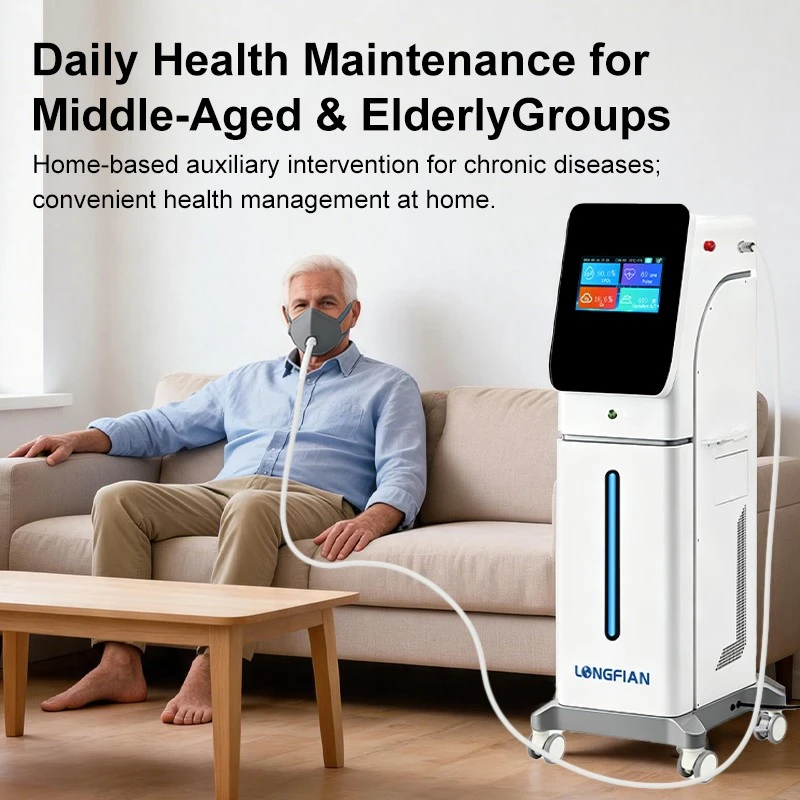
Our JAY-20H IHHT system is designed for professional oxygen-conditioning applications.
Key technical specifications:
Hypoxic oxygen concentration: 9%–16%.
Hyperoxic oxygen concentration: 30%–40%.
Hypoxic gas flow: 26–100 L/min.
Hyperoxic gas flow: 30 L/min.
Automatic oxygen-cycling modes.
SpO₂ and heart-rate monitoring.
10.1-inch touchscreen.
These specifications describe equipment capabilities, not proven anti-aging effects.
Are you planning to introduce IHHT technology into a wellness center, sports facility or professional oxygen-conditioning program?
Contact LONGFIAN to discuss IHHT equipment specifications, OEM opportunities and distribution cooperation.
Website: https://www.longfianoxygen.com/