TL;DR: Two Different Stimuli, One Training Programme
Endurance training challenges the body through physical workload. IHHT introduces controlled changes in the oxygen concentration of inhaled gas.
These are different physiological stimuli.
Endurance exercise develops sport-specific aerobic capacity through repeated physical activity.
IHHT alternates between hypoxic (low-oxygen) and hyperoxic (oxygen-enriched) breathing phases.
Both approaches involve oxygen-related physiological responses, but they do not produce identical adaptations.
IHHT is being investigated for its potential effects on cellular metabolism and physiological conditioning. Its direct benefits for competitive endurance performance are not yet firmly established.
Coaches should keep running, cycling, swimming and other sport-specific sessions at the centre of the programme.
IHHT may be considered as a supervised supplementary activity when its purpose, protocol and safety requirements are clearly defined.
The practical question is not whether IHHT can replace another training session. It is whether it adds a useful and measurable component to the athlete's existing programme.
1. Why Does Endurance Training Depend on Oxygen?
Think about the final kilometres of a marathon.
The athlete is still moving, but maintaining pace becomes increasingly difficult. Muscles require a continuous energy supply, breathing becomes heavier, and the cardiovascular system works harder to deliver oxygen to active tissues.
Oxygen plays an important role in aerobic energy production.
During endurance exercise, several systems work together:
The respiratory system brings oxygen into the lungs.
The cardiovascular system transports oxygen through the blood.
The muscular system extracts and uses oxygen to support energy production.
The mitochondria use oxygen in oxidative metabolism to help produce ATP, the energy currency required for muscular activity.
Endurance training repeatedly challenges these systems.
Over time, appropriately designed training can improve cardiovascular function, mitochondrial capacity, muscular oxidative characteristics and the ability to sustain exercise.
This is why a runner cannot build marathon endurance simply by sitting in an oxygen-controlled environment. The muscles still need the workload, movement patterns and repeated exercise exposure associated with running.
So where does IHHT fit?
It introduces a different type of stimulus: changing oxygen availability rather than increasing mechanical workload.
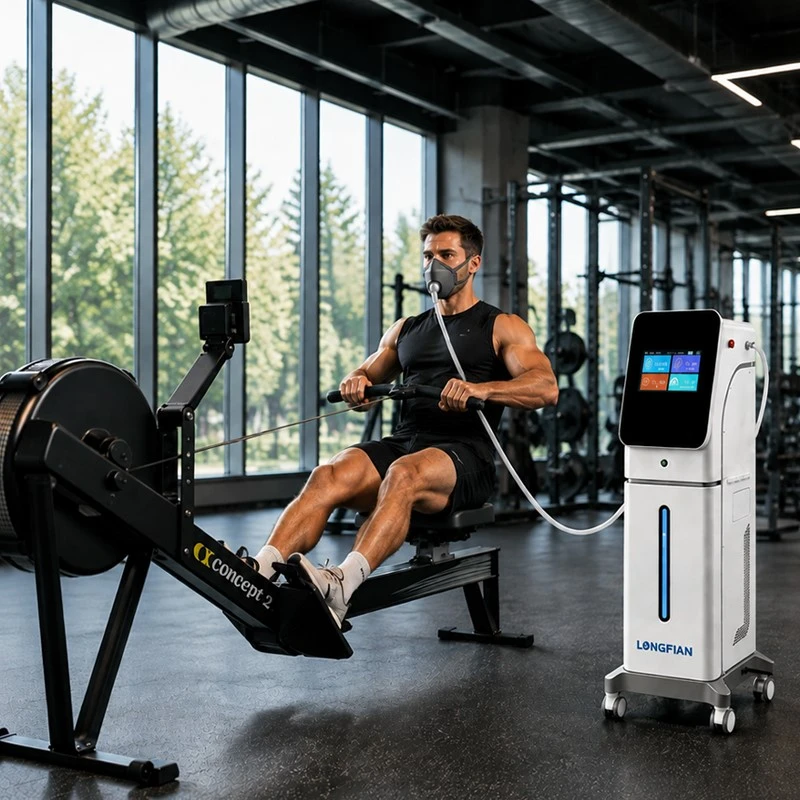
2. What Happens When the Body Experiences Alternating Oxygen Levels?
IHHT stands for Intermittent Hypoxia-Hyperoxia Training.
The name describes its basic operating principle.
Instead of breathing air with the same oxygen concentration throughout a session, the participant alternates between two controlled conditions.
Hypoxia: reduced oxygen availability
During the hypoxic phase, the participant breathes gas with a lower oxygen concentration than normal atmospheric air.
The body detects changes in oxygen availability through several physiological pathways. One important component is the cellular oxygen-sensing system, which includes hypoxia-inducible factors (HIF).
These pathways participate in regulating how cells respond to reduced oxygen availability.
Hyperoxia: increased oxygen availability
During the hyperoxic phase, the participant breathes oxygen-enriched gas.
This changes the oxygen environment again and creates a repeated sequence of hypoxia and reoxygenation.
Researchers are interested in how these alternating conditions may influence mitochondrial function, cellular signalling and oxidative stress responses.
However, a biological response does not automatically translate into a measurable improvement in race performance.
That distinction matters.
At LONGFIAN, we prefer to describe IHHT as controlled oxygen conditioning rather than promise that it will make every athlete faster or increase VO₂max.

3. IHHT vs. Endurance Training: What Is Actually Different?
Coaches sometimes compare IHHT with altitude training because both involve reduced oxygen availability.
There is a connection, but the methods should not be confused.
| Training method | Main stimulus | Typical setting | Main purpose |
|---|---|---|---|
| Conventional endurance training | Repeated physical workload | Running track, gym, pool or cycling route | Develop sport-specific endurance |
| Altitude training | Exercise or exposure in a reduced-oxygen environment | Natural altitude or simulated-altitude facility | Introduce an altitude-related hypoxic stimulus |
| Intermittent hypoxic training (IHT) | Exercise under reduced oxygen conditions | Hypoxic training room or equipment | Combine exercise with hypoxic exposure |
| IHHT | Alternating hypoxic and hyperoxic breathing | Controlled oxygen-conditioning environment | Investigate physiological responses to oxygen fluctuation |
The difference between IHT and IHHT deserves particular attention.
In IHT, the athlete performs physical exercise under hypoxic conditions. In IHHT, the participant generally breathes through a mask while resting, with the equipment alternating between low-oxygen and oxygen-enriched gas.
They have different protocols and training demands.
Evidence from altitude training or IHT should not automatically be treated as evidence for IHHT.
For endurance coaches, this means the methods should be assessed separately before being combined in a training plan.
4. Can IHHT Support an Endurance Athlete's Training Routine?
Let's consider a practical example.
A competitive cyclist has three main training priorities:
Improving aerobic endurance through longer rides.
Developing power and threshold performance through interval sessions.
Managing training load so that fatigue does not accumulate excessively.
The coach is considering adding IHHT.
Would this be useful?
Potentially, but the decision should depend on the athlete's needs and the purpose of the additional session.
There are three areas worth considering.
A. A Different Physiological Stimulus
Training adaptations are influenced by the type, intensity, duration and frequency of a stimulus.
Conventional endurance exercise provides a mechanical and metabolic workload. IHHT introduces controlled oxygen fluctuations without requiring the same level of physical activity.
This makes IHHT a different type of conditioning activity.
Research is investigating whether repeated oxygen fluctuations can influence cellular adaptation and mitochondrial function. These findings are interesting, but more evidence is needed to establish how they translate into competitive sports performance.
B. A Separate Session That Does Not Require Another Running or Cycling Workout
One practical characteristic of IHHT is that it can be performed while the participant is seated.
For a sports facility, this means oxygen-conditioning sessions can be organized separately from track, treadmill or cycling sessions.
It does not mean the athlete is automatically recovering or benefiting from the session. The coach still needs to consider the athlete's overall workload and response.
C. An Additional Service for Professional Sports Facilities
IHHT may also have value from an operational perspective.
A sports performance centre can offer structured oxygen-conditioning sessions alongside its existing training services.
For example, a facility may combine:
Endurance and interval training.
Strength and mobility sessions.
Simulated-altitude training.
Supervised IHHT sessions.
Regular physiological and performance assessments.
The objective is to build a structured service, not to add equipment without a clear training purpose.
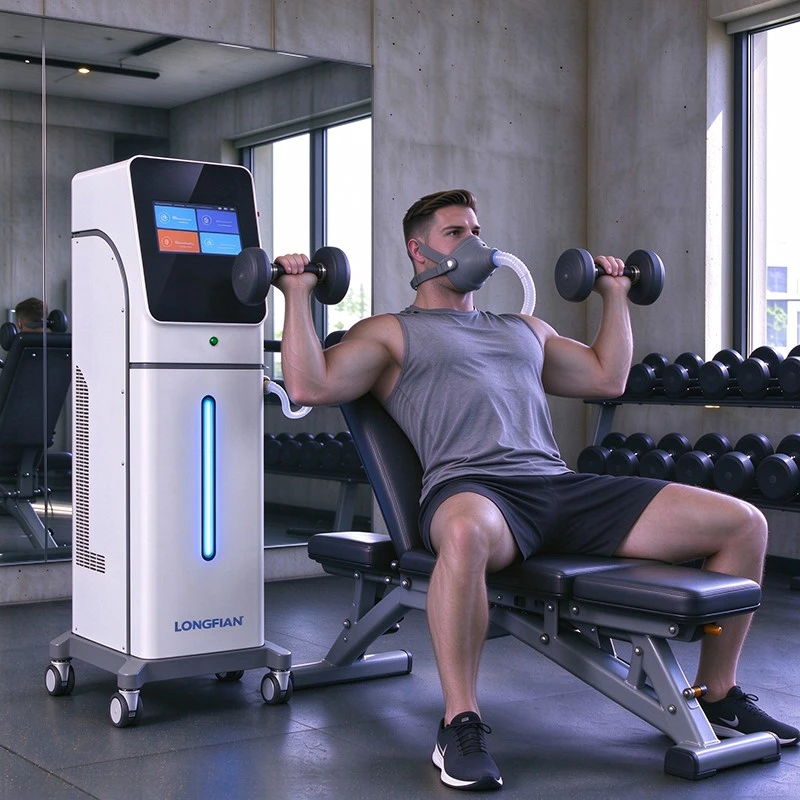
5. Five Steps for Coaches Considering IHHT
Introducing a new conditioning method requires more than choosing an oxygen concentration. We recommend a practical five-step approach.
Step 1: Identify the Athlete's Training Objective
Start with the athlete, not the machine.
Is the athlete preparing for a marathon? Training for a cycling competition? Returning to regular exercise after a break?
The programme should reflect the individual's sport, training history, physical condition and goals.
IHHT should only be considered when there is a clear reason to investigate an additional oxygen-based conditioning method.
Step 2: Protect the Main Endurance Training Schedule
Do not reduce essential endurance sessions simply to make room for IHHT.
A marathon runner still needs long-distance running. A cyclist still needs time on the bike. A swimmer still needs swimming-specific training.
These sessions develop skills and physiological adaptations that passive oxygen exposure cannot reproduce.
The coach should evaluate whether an additional IHHT session fits the existing schedule without creating unnecessary fatigue or interfering with recovery.
Step 3: Choose the Appropriate Oxygen Protocol
IHHT is not one fixed programme.
The oxygen concentration, exposure duration, number of cycles and interval structure can vary.
A suitable protocol requires consideration of the athlete's health status, tolerance, intended application and professional guidance.
A more aggressive hypoxic setting does not automatically produce a better result.
Step 4: Monitor the Response
A professional programme needs measurable information.
Depending on the equipment and assessment setup, coaches and qualified operators may monitor:
SpO₂: peripheral oxygen saturation.
Heart rate.
Session duration and oxygen exposure.
Subjective fatigue and session tolerance.
Training performance over time.
These measurements help operators understand how the athlete responds to the session.
However, SpO₂ alone cannot demonstrate improved endurance, mitochondrial function or athletic performance.
Use established performance tests to evaluate those outcomes.
Step 5: Review the Results Before Continuing
After a supervised trial, review the overall programme.
Did the athlete tolerate the sessions? Did the additional activity fit the training schedule? Was there any measurable change in the outcome being investigated?
If the results are unclear, the coach should reassess the protocol rather than automatically increase exposure.
Good training decisions come from observation and evaluation, not assumptions.
6. What Should Coaches Look for in an IHHT System?
From the equipment manufacturer's perspective, we believe a professional IHHT system should offer controlled oxygen delivery, repeatable cycling and practical monitoring.
For example, LONGFIAN's IHHT system is designed for alternating hypoxic and hyperoxic gas delivery.
Its main technical specifications include:
| Parameter | LONGFIAN IHHT specification |
|---|---|
| Hypoxic oxygen concentration | 9%–16% |
| Hyperoxic oxygen concentration | 30%–40% |
| Hypoxic gas flow | 26–100 L/min |
| Hyperoxic gas flow | 30 L/min |
| Rated power | 680 W |
| Display | 10.1-inch HD colour touchscreen |
| Monitoring | Wireless Bluetooth SpO₂ finger clip |
| Operating modes | Three automatic cycling modes |
| Reference session duration | 40–55 minutes |
| Reference number of cycles | 6–10 |
The system supports three operating modes:
Hypoxia–Hyperoxia.
Normoxia–Hyperoxia.
Hypoxia–Normoxia.
These modes provide different oxygen-cycling configurations for professional operators.
The 10.1-inch touchscreen allows users to view and manage operating parameters, while wireless SpO₂ monitoring supports observation during a session.
For coaches and facility operators, we recommend checking more than the oxygen concentration range.
Also consider gas-flow requirements, automatic switching, monitoring functions, safety alarms, operating procedures and after-sales technical support.
A machine should be selected according to the intended application, not simply because its specifications look impressive.
7. Limitations: What Does the Current Evidence Tell Us?
IHHT is attracting interest in sports science and wellness research, but it is important to separate promising mechanisms from proven performance outcomes.
There are several limitations coaches should understand.
1. Direct endurance-performance evidence remains limited.
Research into IHHT is still developing. Findings from different protocols and participant groups cannot be treated as interchangeable.
2. Hypoxic exposure does not guarantee better VO₂max.
VO₂max is influenced by several physiological factors. Increasing the hypoxic stimulus does not necessarily improve it.
3. IHHT is not a replacement for altitude training or exercise.
A seated IHHT session does not reproduce the muscular workload or sport-specific demands of endurance exercise.
4. Individual responses are different.
Training status, age, health conditions and protocol settings may affect how a participant responds.
5. Hypoxia and hyperoxia require appropriate safety controls.
Reduced and increased oxygen exposure are not suitable for everyone. People with cardiovascular, respiratory or other relevant medical conditions should receive appropriate medical assessment before participating. Sessions should follow professional screening, supervision and equipment operating procedures.
We also want to make one point clear: equipment specifications demonstrate what a machine can deliver. They do not prove that a particular training programme will produce a specific physiological or athletic outcome.
That is why we recommend a measured, professional approach to IHHT.
8. A Practical Sports Centre Scenario: Where Could IHHT Fit?
Consider a sports performance centre serving runners, cyclists and recreational athletes.
The centre already has a training area with treadmills, cycling equipment and strength-training facilities. Its coaches are interested in adding an oxygen-conditioning service.
Instead of changing the existing endurance programme, the centre introduces a separate IHHT service under qualified supervision.
Its service structure might look like this:
| Existing service | Additional service |
|---|---|
| Running and cycling training | Supervised IHHT sessions |
| Threshold and interval workouts | Controlled oxygen cycling |
| Strength and mobility training | Oxygen-conditioning assessment |
| Regular performance testing | Session data and response tracking |
The centre can then evaluate how the new service fits its business model and whether clients find it useful.
This is an illustrative application scenario, not a clinical case report or a claim of proven athletic improvement.
What We Discuss with Professional Buyers
Through our work in oxygen equipment manufacturing and international customer communication, we understand that sports facilities have different requirements.
Some buyers need an IHHT system for individual sessions. Others are more interested in high-flow hypoxic generators for simulated-altitude training rooms.
These are different applications.
At professional medical and fitness exhibitions, discussions about oxygen technology often begin with three practical questions:
What type of users will the facility serve?
Will the equipment be used for individual IHHT sessions or group altitude training?
What oxygen concentration, gas flow and monitoring functions are required?
We encourage facility operators and distributors to discuss these details before selecting equipment.
The right configuration depends on the actual project.
9. Frequently Asked Questions
Q1. Can IHHT improve VO₂max?
There is not yet sufficient direct evidence to conclude that IHHT consistently improves VO₂max in endurance athletes.
Coaches should continue using established endurance training and performance testing as the foundation of their programmes.
Q2. Is IHHT the same as altitude training?
No. Altitude training involves exposure to reduced oxygen availability, often during physical exercise. IHHT alternates between hypoxic and hyperoxic breathing phases, generally while the participant is resting.
Both involve oxygen manipulation, but their protocols and physiological demands are different.
Q3. Can IHHT replace a recovery day?
It should not automatically be classified as a recovery session.
Although IHHT generally involves low physical workload, it still introduces physiological stress. Its position in the training schedule should be decided according to the athlete's condition and professional assessment.
Q4. Do athletes need to exercise during an IHHT session?
A typical IHHT session is performed at rest while the participant breathes through a mask.
This differs from intermittent hypoxic exercise training, where the athlete performs physical activity under reduced oxygen conditions.
Q5. How long does a LONGFIAN IHHT session take?
The reference session duration for the LONGFIAN IHHT system is approximately 40–55 minutes, with a reference range of 6–10 cycles.
Actual session parameters should be selected according to the intended application and professional protocol.
Q6. What should a sports centre consider before purchasing an IHHT machine?
We recommend evaluating:
Hypoxic and hyperoxic oxygen concentration ranges.
Gas flow capacity.
Automatic oxygen-switching functions.
SpO₂ monitoring.
Adjustable operating modes.
Safety alarms and operating procedures.
Installation requirements and technical support.
It is also important to distinguish an automatic IHHT system from a conventional hypoxic generator. They are not necessarily interchangeable.
10. Final Thoughts: Endurance Training First, Oxygen Conditioning as an Additional Option
Can IHHT complement endurance training?
It is a reasonable area to explore, provided coaches understand the differences between exercise-based training and oxygen-based conditioning.
Endurance training develops the athlete's ability to perform. IHHT introduces controlled oxygen fluctuations that researchers are studying for their potential physiological effects.
They have different roles.
At LONGFIAN, we believe oxygen technology should be developed around real training needs. Our IHHT equipment is designed to provide adjustable hypoxic and hyperoxic gas delivery, automatic oxygen cycling and physiological monitoring for professional applications.
We do not believe that one machine can replace a well-designed training programme.
We believe the right equipment, used for the right purpose and under appropriate supervision, can give professional facilities another option to consider.
Are you a sports coach, gym owner or distributor exploring IHHT technology?
Contact LONGFIAN SCITECH CO., LTD. to discuss our IHHT system, technical specifications and possible equipment configurations.
Website: https://www.longfianoxygen.com/
Let's discuss how oxygen technology can fit into your sports performance or conditioning project.